
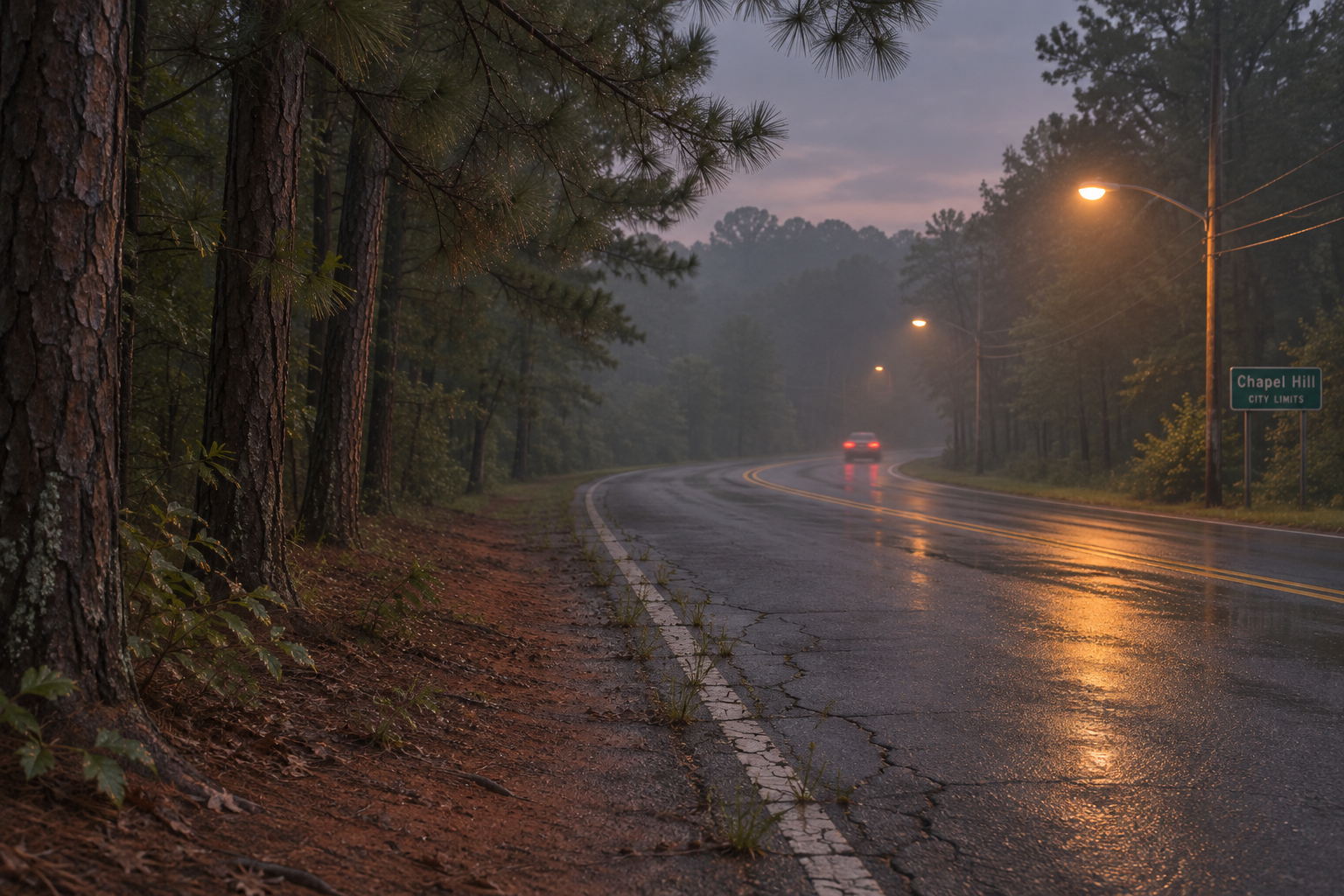
If you were hurt in a drunk driving accident in Chapel Hill, NC, or in nearby Apex, the driver’s insurance company may already be contacting you. North Carolina law gives you the right to pursue a civil claim against the driver, and in some cases against the bar or host who served them alcohol. This post explains how those claims work, what deadlines apply, and what steps protect your recovery..
What Your Legal Rights Are After a Drunk Driving Accident in Chapel Hill, NC
A drunk driver who causes a crash is negligent. Negligence, in plain terms, means the driver failed to act with reasonable care and that failure caused your injuries. In a drunk driving case, proof of impairment, such as a blood alcohol reading above the legal limit or a DWI arrest, is strong evidence of that failure.
Beyond the driver, North Carolina law may let you bring a claim against other parties who contributed to the harm. Those include bars and restaurants that over-served the driver, and in some situations, private individuals who provided alcohol at a party.
What Damages You Can Seek
A civil injury claim in North Carolina can include:
- Medical bills, past and future
- Lost wages and reduced earning capacity
- Pain and suffering
- Property damage
- In cases involving egregious conduct, punitive damages
Punitive damages are a category of damages meant to punish a wrongdoer rather than simply compensate the victim. Under N.C. Gen. Stat. §§ 1D-15 and 1D-25, punitive damages are allowed when a defendant acted with malice, fraud, or willful or wanton conduct. Drunk driving is often treated as willful or wanton conduct, which means punitive damages can be available in these cases. The statute also caps the amount a court can award. The specific facts of a case determine whether punitive damages apply, so a lawyer needs to review them.
How NC’s Contributory Negligence Rule Affects Your Claim
North Carolina follows a rule called pure contributory negligence. It comes from court decisions, not a statute. Under this rule, if a court finds that you were even slightly at fault for the crash, you can be barred from recovering anything at all.
Insurance adjusters know this rule well. After a drunk driving crash, an adjuster may still look for any argument that you were speeding, failed to yield, or otherwise contributed to the collision. Even a small share of fault, under North Carolina law, can end a claim. There are narrow exceptions, but they are limited.
This is one reason why the steps you take in the hours and days after a crash matter. You can read more about how contributory negligence works in a broader context on our post about NC contributory negligence and personal injury claims.
What to Do After a Drunk Driving Crash in Chapel Hill or Apex
Taking the right steps early preserves evidence and protects your options.
- Call 911. A police report documents the scene, the driver’s condition, and any field sobriety or breath tests. This report is often the most important piece of evidence in a drunk driving claim.
- Seek medical care immediately. Even if your injuries feel minor, get evaluated. Some injuries, including concussions and internal bleeding, don’t show full symptoms right away. Gaps in medical care give insurers a reason to dispute your claim.
- Document the scene. If you’re physically able, photograph the vehicles, the road, any skid marks, and any visible injuries before vehicles are moved.
- Get contact information. Collect names and phone numbers for witnesses. Bystanders who saw the driver’s behavior can be valuable.
- Don’t give a recorded statement to the other driver’s insurer. Adjusters use recorded statements to find inconsistencies. You’re not required to give one, and doing so before you’ve spoken to a lawyer can hurt your claim. Our post on what not to say to an insurance adjuster walks through this in detail.
- Preserve your own records. Save every medical bill, prescription receipt, and document related to missed work.
How to Report a Drunk Driver in North Carolina
If you see a suspected drunk driver before a crash occurs, call 911 immediately. Give the dispatcher the vehicle’s make, color, license plate if visible, location, and direction of travel. The NC Department of Transportation and local law enforcement coordinate on impaired driving enforcement, particularly in areas with high nighttime traffic volumes.
Dram Shop Claims: When a Bar or Restaurant Shares Liability
North Carolina has a dram shop law, which is a civil law that lets an injured person sue a bar, restaurant, or other alcohol permittee that served alcohol to a visibly intoxicated person or to someone under the legal drinking age, when that service contributed to causing an injury.
The legal authority is N.C. Gen. Stat. Chapter 18B, Article 12. The law applies to any business licensed to sell alcohol in North Carolina, which includes establishments around the University of North Carolina campus, bars along Franklin Street in Chapel Hill, and restaurants and venues throughout Apex and the surrounding area.
To bring a dram shop claim, you generally need to show:
- The establishment sold or served alcohol
- The person served was visibly intoxicated or under 21 at the time of service
- That service was a cause of the crash and your injuries
Proving visible intoxication often comes down to witness testimony, surveillance footage, receipts showing how many drinks were purchased, and the driver’s blood alcohol level at the time of the crash. Evidence from the scene fades quickly, which is part of why early action matters.
For a full breakdown of how dram shop claims work in North Carolina, see our post on NC dram shop law and suing a bar after a DUI crash.
Social Host Liability in North Carolina
Social host liability refers to the civil responsibility of a private individual, not a business, who provides alcohol at a party or gathering and whose guest later causes a drunk driving crash.
North Carolina’s social host liability rules are narrower than its dram shop law. Generally, a private host is not liable for an adult guest’s actions after leaving the party. The law treats adults as responsible for their own choices. However, there are circumstances, particularly involving alcohol provided to minors, where liability can attach.
If the driver who hit you was a minor who was served at a private gathering, the host’s liability is a serious question that a lawyer needs to evaluate based on the specific facts. Our post on social host liability in North Carolina covers those rules in more detail.
Filing Deadlines: How Long You Have to Act
Under N.C. Gen. Stat. § 1-52(16), the general deadline to file a personal injury lawsuit in North Carolina is three years from the date of the injury. Miss that deadline, and a court will almost certainly dismiss your case regardless of how strong it is.
If a drunk driving crash killed a family member, a wrongful death claim operates under a different statute: N.C. Gen. Stat. § 28A-18-2. Wrongful death claims generally must be filed within two years of the date of death. Say “generally” here because exceptions exist in limited circumstances. Confirm your specific deadlines with a lawyer as soon as possible.
Three years can feel like a long time, but waiting works against you. Witnesses move or forget what they saw. Surveillance footage gets overwritten. The driver’s insurer starts building its defense the day the crash happens. Early investigation strengthens a claim. For more on how deadlines apply in NC injury cases, see our post on how long you have to file a personal injury claim in North Carolina.
How Insurance Works in a Drunk Driving Case
Most drunk driving claims start with the at-fault driver’s liability insurance. North Carolina requires drivers to carry minimum liability coverage, though minimum limits are often not enough to cover serious injuries.
If the driver’s coverage runs out, your own uninsured/underinsured motorist (UM/UIM) coverage may apply. This is coverage you purchased on your own policy that steps in when the at-fault driver doesn’t have enough insurance. NC law requires insurers to offer UM/UIM coverage, though drivers can waive it in writing.
The NC Department of Insurance provides general information about minimum coverage requirements in North Carolina.
In a dram shop case, the bar or restaurant may carry commercial general liability or liquor liability insurance, which creates an additional potential source of recovery. Those policies vary significantly, and the insurer for the establishment will also investigate the claim aggressively.
Frequently Asked Questions
Can I sue the bar that served the drunk driver who hit me in Chapel Hill?
You may be able to, under North Carolina’s dram shop law. If a bar or restaurant with an alcohol permit served the driver while visibly intoxicated, or served them when they were under 21, and that service contributed to the crash, the establishment can be held civilly liable. The strength of a dram shop claim depends on the specific evidence available, so a lawyer needs to review what happened.
Does a DWI conviction against the driver automatically mean I win my civil case?
A DWI conviction is strong evidence of negligence, but civil and criminal cases are separate proceedings with different standards of proof. A conviction makes it easier to establish the driver’s fault in a civil claim, but it doesn’t eliminate the need to prove your damages or overcome other defenses, including arguments that you share some fault under North Carolina’s contributory negligence rule.
What if the drunk driver had no insurance or very little coverage?
Your own uninsured/underinsured motorist (UM/UIM) coverage may apply. This coverage is on your own auto policy and steps in when the at-fault driver’s coverage is insufficient. In a dram shop case, the bar or restaurant’s liability insurance may be an additional source. A lawyer can help identify all available coverage based on your specific situation.
How long do I have to file a drunk driving injury claim in North Carolina?
The general deadline for a personal injury claim in North Carolina is three years from the date of injury, under N.C. Gen. Stat. § 1-52(16). If a family member died in the crash, the wrongful death deadline is generally two years under N.C. Gen. Stat. § 28A-18-2. Exceptions exist in limited circumstances. Talk to a lawyer promptly to confirm the deadlines that apply to your situation.
Does it matter that the drunk driving crash happened in Chapel Hill rather than Raleigh?
North Carolina law governs drunk driving injury claims statewide. The same statutes, deadlines, and rules, including dram shop liability and contributory negligence, apply whether the crash happened in Chapel Hill, Apex, or any other town in the state. The local facts matter for investigation and evidence gathering, but the legal framework is the same.
What if I was a passenger in the car driven by a drunk driver? Can I still file a claim?
Generally, yes. As a passenger, you typically did not operate a vehicle, so the contributory negligence defense is harder to apply against you. You may have a claim against the drunk driver and potentially against any establishments that over-served them. The specific facts determine whether any defenses apply, so a lawyer should review your situation.
Talk to a Lawyer About Your Drunk Driving Accident Claim
Justin Osborn spent years working on the insurance and defense side before representing injured people, so he understands how insurers evaluate and dispute these claims from the inside.
If you or a family member was hurt in a drunk driving accident in Chapel Hill, Apex, or anywhere in North Carolina, you can request a free case evaluation at Osborn Injury Lawyers or call (919) 935-5555 to talk through what happened and what options may be available.
This article is general information about North Carolina law, not legal advice. Reading it does not create an attorney-client relationship with Osborn Injury Lawyers, and the outcome of any case depends on its own facts.