
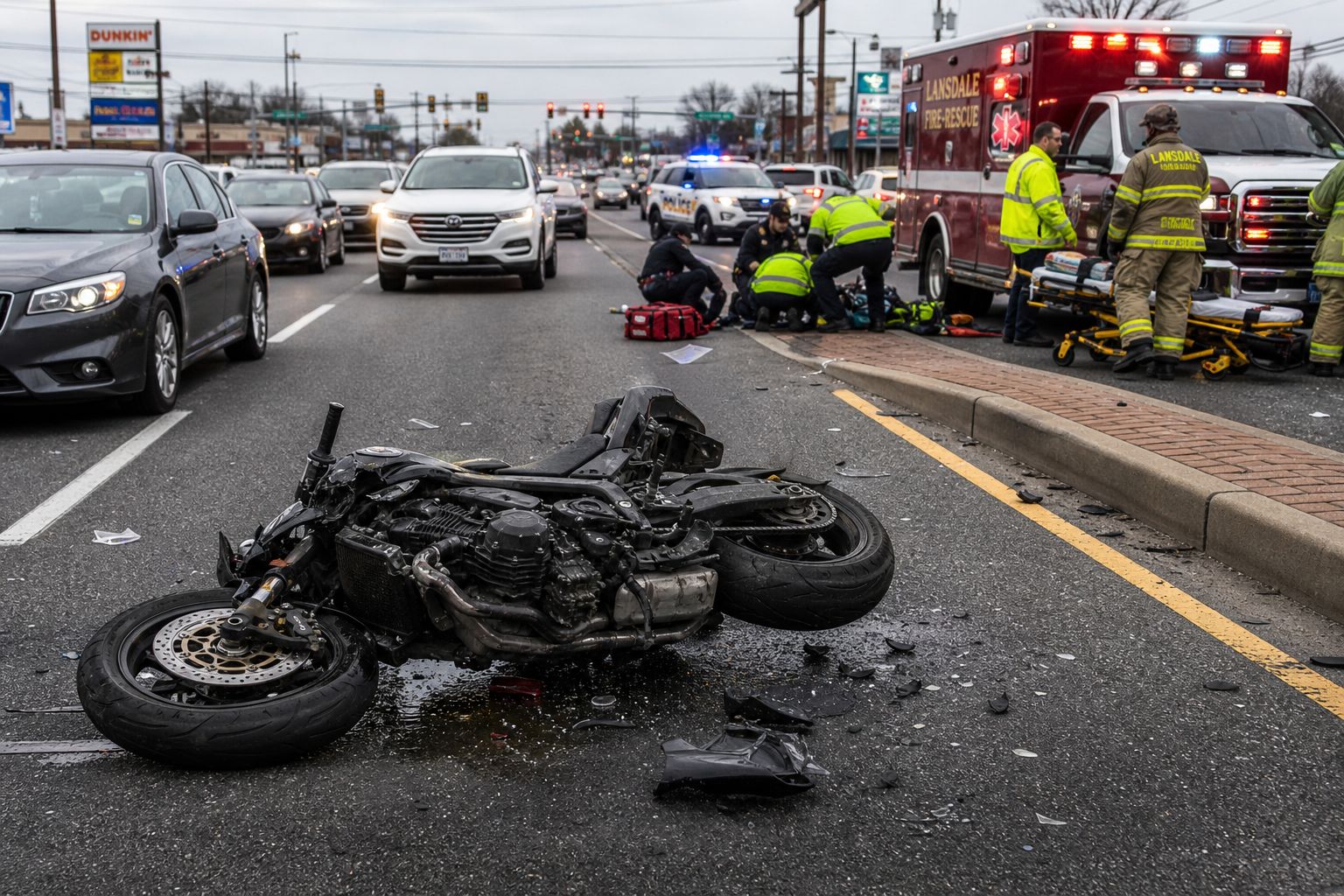
North Carolina motorcycle accident laws can end a claim before it starts if you don’t know how they work. The state’s fault rules are stricter than most, the filing deadline is firm, and insurance adjusters are trained to use both against you. Whether you’re a rider who was just hit or someone doing research before riding season, these rules are the first practical thing to understand.
What North Carolina Law Requires of Motorcycle Riders
North Carolina sets specific requirements for anyone operating a motorcycle on public roads. Meeting these requirements matters in a crash claim because an insurer will check whether you were in compliance and use any violation as an argument that you share blame for the accident.
Helmet Law
Every motorcycle operator and passenger in North Carolina must wear a helmet that meets federal safety standards. This is not optional for adults, unlike in some other states. Riding without a compliant helmet won’t automatically bar your injury claim, but an insurer or defense lawyer will argue that your head or brain injuries would have been less severe with a proper helmet. That argument can reduce what you’re able to recover.
Helmet use matters beyond legal strategy. According to NHTSA, helmets are estimated to reduce the risk of motorcycle crash death by about 37 percent for riders.
License and Equipment Requirements
Riders must hold a valid motorcycle endorsement on their driver’s license. The state also requires that every motorcycle have working mirrors, turn signals, a horn, and proper lighting. A motorcycle operated without required equipment gives an insurer an opening to argue operator fault.
Lane Splitting
Lane splitting, which means riding between lanes of moving or stopped traffic, is not legal in North Carolina. If a crash happens while you’re lane splitting, expect the other side to argue that your own conduct caused or contributed to the collision.
North Carolina Motorcycle Accident Laws on Fault: The Contributory Negligence Rule
North Carolina follows a legal doctrine called contributory negligence. In plain terms: if a court finds that you were even slightly at fault for your own crash, you can be completely barred from recovering any money from the other party. This rule comes from North Carolina court decisions, not a single statute.
This is stricter than the rule in most states. Many states use a “comparative fault” system, where you can still recover even if you were partially at fault, though your award is reduced by your percentage of blame. North Carolina does not work that way.
Insurance adjusters working against a motorcycle claim actively look for anything that suggests the rider contributed to the crash. That includes speeding, lane position, not wearing proper gear, following too closely, or any equipment violation. Justin Osborn spent years on the insurance side as a defense lawyer and adjuster, and the contributory negligence argument is one of the first places that side looks when a motorcycle is involved.
The stakes are real. NHTSA data shows that motorcyclists are significantly overrepresented in fatal crash statistics relative to their share of vehicle miles traveled. A contributory negligence finding in that context can eliminate a claim entirely.
There are narrow exceptions to the contributory negligence bar, including a doctrine called “last clear chance.” That doctrine may apply if the other driver had an opportunity to avoid hitting you and failed to take it. Whether those exceptions apply depends entirely on the specific facts, which is why talking to a lawyer before giving the insurer a recorded statement is worth doing.
For more on how fault is assigned in North Carolina collisions, the motorcycle accident claims page explains how the process works.
Filing Deadlines: How Long You Have to Sue
The general deadline to file a personal injury lawsuit in North Carolina is three years from the date of the injury, under N.C. Gen. Stat. § 1-52(16). For a crash that kills someone, a wrongful death claim generally must be filed within two years under N.C. Gen. Stat. § 28A-18-2, though there are exceptions, and the exact deadline depends on the facts of each case.
Missing the deadline typically means losing the right to sue entirely, regardless of how strong the claim is. Three years can feel like a long time, but investigations take time, records take time to collect, and building a case before the clock runs out takes preparation.
Our post on how long you have to file a personal injury claim in North Carolina walks through the general rule and the circumstances where different timelines can apply.
What Insurance Covers After a Motorcycle Crash in NC
Required Coverage in North Carolina
North Carolina requires motorcycle operators to carry liability insurance. The minimum limits set by state law are intended to cover damage or injury you cause to others. They are not designed to cover your own injuries if the other driver was at fault.
The NC Department of Insurance publishes current minimum coverage requirements and consumer information about motorcycle insurance.
Uninsured and Underinsured Motorist Coverage
Uninsured motorist (UM) and underinsured motorist (UIM) coverage are among the most important protections a rider can carry. If the driver who hit you has no insurance, or not enough insurance to cover your medical bills and lost income, your own UM/UIM policy may be the only source of meaningful recovery.
North Carolina requires insurers to offer UM coverage, though riders can sometimes waive certain limits in writing. According to the Insurance Information Institute, approximately one in eight drivers nationwide is uninsured, which underscores why UM coverage matters before a crash, not after.
Reviewing your own policy before a crash, not after, is the kind of preparation that changes outcomes.
How Insurers Evaluate Motorcycle Claims
Insurance adjusters often apply assumptions about motorcycle riders: that they were speeding, weaving, or doing something to cause the crash. That assumption shapes how quickly they open an investigation and how aggressively they raise contributory negligence.
According to NHTSA, motorcyclists accounted for 14 percent of all traffic fatalities in a recent reporting year while making up a far smaller share of registered vehicles. That disproportion reflects both real risk and the severity of injuries when crashes happen.
Documenting the scene, getting witness information, seeking medical treatment promptly, and not giving a recorded statement to the other driver’s insurer without understanding your rights all help preserve a claim.
Steps to Take After a Motorcycle Crash in North Carolina
These steps are general guidance, not legal advice for your specific situation. The facts of every crash are different.
- Call 911. A police report creates an official record of the crash, including the other driver’s information and any citations issued at the scene.
- Get medical attention, even if you feel okay. Adrenaline can mask pain. A gap between the crash and medical treatment gives the other side an argument that your injuries weren’t serious or weren’t caused by the crash.
- Document everything you can. Photographs of the scene, road conditions, your motorcycle, the other vehicle, and your injuries are evidence that degrades quickly.
- Get witness contact information. Independent witnesses who saw what happened can matter significantly when fault is disputed.
- Don’t give a recorded statement to the other driver’s insurer. You generally are not required to, and anything you say becomes part of their file.
- Talk to a lawyer before accepting any settlement offer. A settlement offer early in the process typically comes before the full extent of your injuries is known.
The CDC notes that medical costs and productivity losses from motorcycle crash injuries run into the billions of dollars annually, which reflects how serious these injuries tend to be and why early documentation matters.
For reference on general crash steps, the post what to do immediately after a car accident in NC covers overlapping ground that applies to motorcycle crashes as well.
Damages You May Be Able to Claim
In a North Carolina motorcycle accident claim, the types of losses that can be part of a claim generally include:
- Medical expenses, both past and future
- Lost wages and reduced earning capacity
- Pain and suffering
- Property damage to your motorcycle and gear
- Permanent disability or scarring
In cases where the other driver’s conduct was especially reckless, punitive damages may also be available. N.C. Gen. Stat. §§ 1D-15 and 1D-25 govern when punitive damages apply and cap them at three times the compensatory damages or $250,000, whichever is greater. Punitive damages are rare and fact-specific, so whether they apply depends on the circumstances of the crash.
What any individual claim is worth depends entirely on the facts. No lawyer can tell you a number without reviewing those facts, and anyone who quotes a figure before doing so is not giving you accurate information.
For a broader look at the types of claims that arise from vehicle collisions in North Carolina, the vehicle accidents page on this site provides an overview.
Frequently Asked Questions
What happens if I wasn’t wearing a helmet during my North Carolina motorcycle crash?
Not wearing a helmet doesn’t automatically bar your claim, but it gives the other side an argument that your head or brain injuries were made worse by your own conduct. Under North Carolina’s contributory negligence rule, if a court finds you even slightly at fault for the severity of your own injuries, it can affect your ability to recover. How much that argument damages a claim depends on the injuries involved and the specific facts.
Does lane splitting affect a motorcycle accident claim in North Carolina?
Yes. Lane splitting is illegal in North Carolina, so if you were riding between lanes when the crash happened, the other side will argue that you contributed to the collision. Under contributory negligence, even a small finding of fault on your part can bar your claim entirely. That doesn’t mean you have no claim, but it does mean the facts need careful review.
How long do I have to file a motorcycle accident lawsuit in North Carolina?
The general deadline is three years from the date of the crash under N.C. Gen. Stat. § 1-52(16). If someone was killed, the wrongful death deadline is generally two years under N.C. Gen. Stat. § 28A-18-2. Exceptions exist and the deadline can sometimes be shorter depending on who is being sued, so confirming your specific timeline with a lawyer promptly is the right move.
Can I still recover if the driver who hit me has no insurance?
Possibly. If you carry uninsured motorist (UM) coverage on your own motorcycle policy, that coverage may pay for your injuries when the at-fault driver has none. The amount available depends on your policy limits. This is one reason why carrying UM and underinsured motorist coverage above the minimum is worth considering before a crash happens.
What is the biggest mistake riders make after a motorcycle crash in North Carolina?
Giving a recorded statement to the other driver’s insurance company without first understanding your rights is one of the most common problems. Adjusters are trained to ask questions in ways that surface admissions about speed, lane position, or awareness. Those admissions can later be used to argue contributory negligence. You’re generally not required to give that statement, and doing so before you know where the fault investigation is headed can hurt a claim.
Does North Carolina’s contributory negligence rule mean I can’t recover if I was partly at fault?
Generally, yes, and this surprises many riders who move here from other states. North Carolina’s contributory negligence rule bars a claim entirely if the injured person was even slightly at fault. Other states use a partial-fault system that still allows partial recovery. There are narrow exceptions in North Carolina, including the “last clear chance” doctrine, but whether an exception applies is a fact-specific question that a lawyer needs to evaluate.
Understanding North Carolina Motorcycle Accident Laws Before You Talk to an Insurer
The rules around fault, deadlines, and insurance coverage in a North Carolina motorcycle crash claim are not straightforward, and the other side’s insurer knows them well. If you have questions about a specific crash, a free case evaluation is a practical next step.
Request a free case evaluation at Osborn Injury Lawyers or call (919) 935-5555.
This article is general information about North Carolina law, not legal advice. Reading it does not create an attorney-client relationship with Osborn Injury Lawyers, and the outcome of any case depends on its own facts.