
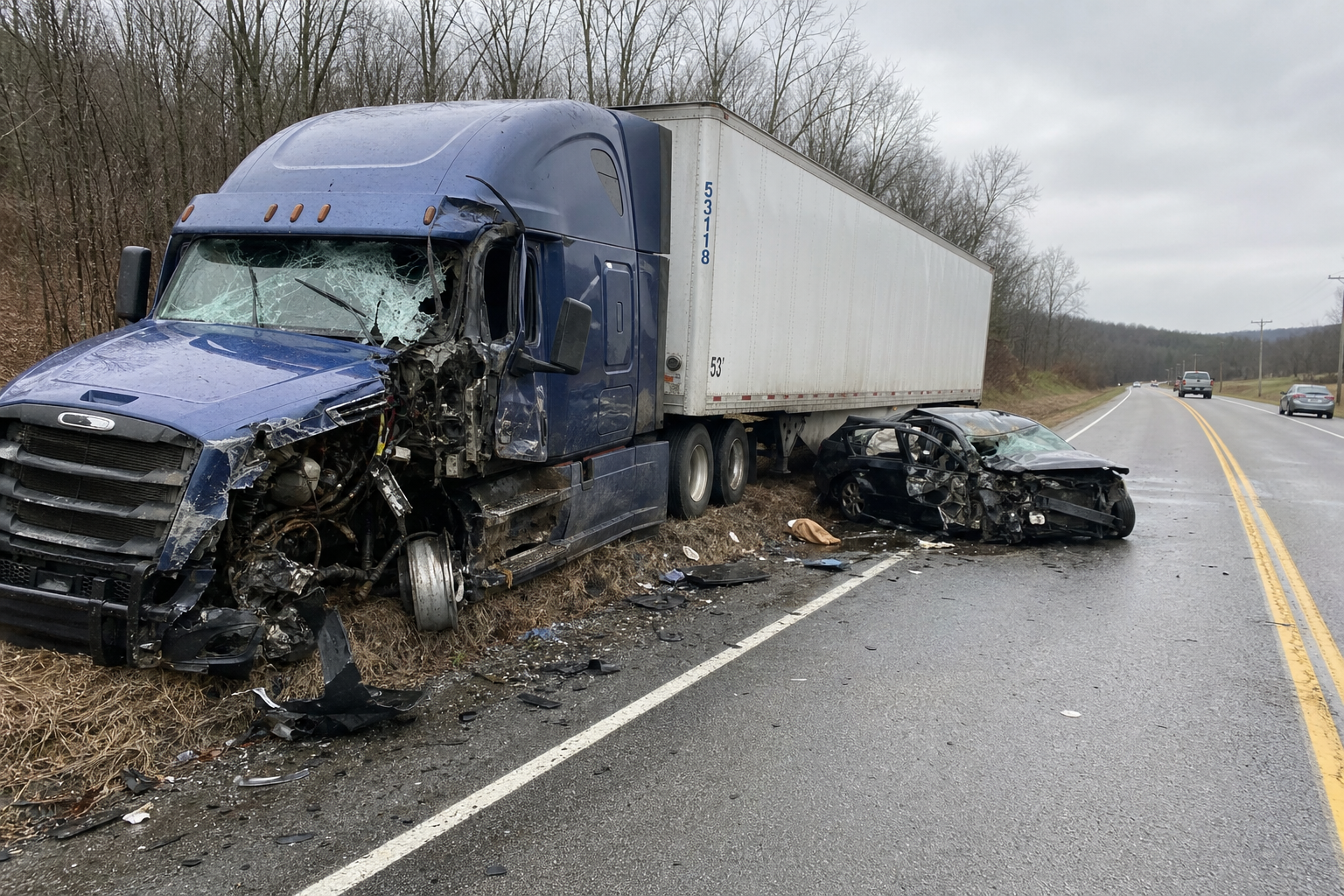
A semi-truck accident in North Carolina is legally different from a crash between two passenger cars. Multiple companies may share fault, federal safety rules apply on top of state law, and the most important evidence can disappear within days. If you or a family member was hurt in a collision with an 18-wheeler or tractor-trailer, knowing how these claims work helps you protect your rights from the start.
Why a Semi-Truck Accident in North Carolina Is More Complex Than a Car Crash
A semi-truck accident in North Carolina often involves more potential defendants than a typical car crash. The truck driver, the trucking company, a cargo loading company, a truck manufacturer, or a maintenance contractor could each bear some responsibility, depending on what caused the collision. Identifying all of them matters because some carry separate insurance policies.
Trucking companies know that large claims follow serious crashes. According to the Federal Motor Carrier Safety Administration (FMCSA), large trucks were involved in roughly 168,000 injury crashes in a single recent year across the United States. Carriers often have experienced adjusters and lawyers working the case within hours of a wreck. That is not a criticism; it is how the industry operates. Knowing that early pressure is coming is the first step toward handling it clearly.
Federal Regulations That Apply to Commercial Trucking
Trucks that cross state lines or haul regulated cargo must follow rules set by the FMCSA. These include limits on how many hours a driver can operate before resting, requirements for pre-trip inspections, standards for how cargo is secured, and minimum insurance amounts that carriers must maintain.
When a carrier or driver violated one of those rules before a crash, that violation can be strong evidence of negligence. Negligence means a failure to use reasonable care that causes harm to someone else.
The FMCSA’s hours-of-service rules, for example, limit most commercial truck drivers to 11 hours of driving within a 14-hour window after coming off rest. A driver who exceeded those limits before a crash has violated a federal safety rule, and that fact becomes part of the evidence.
North Carolina Traffic Law Also Applies
State law governs how trucks must operate on North Carolina roads alongside federal rules. The North Carolina Department of Transportation (NCDOT) sets weight limits, lane restrictions, and permitting requirements for oversized loads. A violation of those rules can support a negligence claim just as a federal violation can.
NCDOT tracks crash data statewide. North Carolina highways, including Interstate 40 and Interstate 95, carry significant commercial truck traffic, which contributes to the state’s annual crash statistics tracked at NCDOT.
Who Can Be Held Liable After a Truck Crash
Liability, meaning legal responsibility for the harm caused, can fall on more than one party in a trucking case. Here are the most common:
- The truck driver, if distracted driving, speeding, impaired driving, or hours-of-service violations played a role
- The trucking company, if it hired an unqualified driver, failed to maintain the truck, or pressured drivers to skip rest breaks
- A cargo company, if improperly loaded or secured freight caused the truck to tip, jackknife, or spill
- A truck manufacturer or parts supplier, if a defective brake, tire, or steering component contributed to the crash
- A maintenance contractor, if it serviced the truck negligently
Sorting out who is responsible requires records: driver logs, inspection reports, cargo manifests, maintenance files, and the truck’s electronic data recorder, sometimes called the “black box.”
The FMCSA’s Large Truck Crash Causation Study found that brake problems were a factor in a significant share of truck crashes, which is one reason maintenance records matter so much in these cases.
Evidence That Can Disappear Quickly
Trucking companies must keep certain records under federal rules, but those retention periods have limits. Electronic logging device records, for example, may be overwritten or deleted within weeks if no one sends a formal legal demand to preserve them.
A spoliation letter is a written demand asking a company to preserve evidence before it is destroyed or altered. Sending one early is one of the most practical things a lawyer does in a truck case.
Other evidence that matters in truck accident cases includes:
- Dashcam or roadside camera footage
- The truck’s event data recorder, which can capture speed, braking, and steering inputs before impact
- Driver qualification files, including employment applications and prior safety violations
- Drug and alcohol testing records taken after the crash
- Post-accident inspection reports
The sooner a lawyer sends a preservation demand, the better the chance that this evidence survives. The FMCSA requires carriers to retain driver logs for at least six months, but other records have shorter windows, and some digital data can be lost even sooner.
North Carolina’s Contributory Negligence Rule and Why Insurers Raise It
North Carolina follows a strict legal doctrine called contributory negligence. It comes from court decisions, not a single statute. Under this rule, a person found even slightly at fault for a crash can be completely barred from recovering anything from the other party. Narrow exceptions exist, but they are not easy to meet.
This is exactly why trucking company adjusters often look hard for any argument that the other driver shares blame: changing lanes without a signal, following too closely, or being slightly over the speed limit. None of those things are morally equivalent to a fatigued truck driver running a red light, but under North Carolina law, they can matter legally.
Understanding that this argument is coming, and gathering evidence that counters it, is part of building a solid claim. For a closer look at how fault is determined in rear-end situations, which come up often in truck crash cases, see Who Is At Fault in a Rear-End Accident?
Damages You May Be Able to Seek
Damages is the legal term for money a court can award to compensate an injured person. In a truck accident claim, compensatory damages typically cover:
- Medical expenses, both past and future
- Lost wages and reduced earning capacity
- Pain and suffering
- Property damage
- Costs of long-term care, if injuries are severe
The CDC reports that crash-related injuries are among the leading causes of serious medical costs for working-age adults in the United States, and collisions involving large commercial vehicles tend to produce more severe injuries because of the weight difference between a fully loaded semi-truck and a passenger car.
In cases where a trucking company’s conduct was especially reckless, North Carolina law also allows a court to consider punitive damages. Punitive damages are meant to punish extreme wrongdoing rather than just compensate the victim. Under N.C. Gen. Stat. §§ 1D-15 and 1D-25, punitive damages require proof that the defendant acted with fraud, malice, or willful and wanton conduct, and the amount is capped under state law.
No lawyer can tell you what your case is worth before reviewing the facts. The answer depends on the severity of your injuries, the clarity of the liability evidence, and many other factors.
The Filing Deadline for Truck Accident Claims in North Carolina
Under N.C. Gen. Stat. § 1-52(16), the general deadline to file a personal injury lawsuit in North Carolina is three years from the date of the injury. Miss that window and a court will almost certainly dismiss the case, regardless of how strong it would otherwise be.
If someone was killed in a truck crash, the family’s wrongful death claim is governed by N.C. Gen. Stat. § 28A-18-2, which generally carries a two-year deadline. “Generally” matters here: some facts can shorten or extend these periods, so confirm your specific dates with a lawyer as soon as possible.
For a detailed breakdown of how these deadlines work, see How Long Do You Have to File a Personal Injury Claim in North Carolina?
The deadline is not the only reason to act early. Evidence preservation is time-sensitive in ways that a filing deadline is not. Both reasons point in the same direction.
What to Do After a Semi-Truck Crash
The steps you take in the days after a truck wreck can shape what evidence is available later.
- Get medical care first. Go to the emergency room or your doctor even if you feel only minor pain. Injuries from large-vehicle crashes often worsen over the first 48 to 72 hours, and a gap in treatment can become a point of dispute.
- Call law enforcement. A police report documents the scene, identifies the driver and carrier, and captures initial accounts while memories are fresh.
- Photograph everything you can safely reach. Take pictures of both vehicles, the road, any skid marks, cargo spillage, and your own visible injuries.
- Write down what you remember. Record the sequence of events, road conditions, and anything the driver said, as soon as you can.
- Do not give a recorded statement to the trucking company’s insurer without first speaking to a lawyer. Adjusters are trained to ask questions in ways that may produce answers that undermine your claim.
- Contact a lawyer to send a preservation demand. This is one of the first things a lawyer does in a truck case, and it protects evidence that would otherwise be lost.
The NHTSA notes that evidence collected at the scene and in the immediate aftermath of a crash is often the most reliable, which is why prompt action matters. For a broader guide on steps to take after any serious crash, see What to Do Immediately After a Car Accident in NC.
Frequently Asked Questions
Can I sue the trucking company, not just the truck driver?
Yes, in many cases. If the driver was an employee acting within the scope of employment at the time of the crash, the company can be held liable under a legal theory called respondeat superior, which holds employers responsible for their employees’ actions on the job. Beyond that, you may have a separate claim against the company for its own conduct, such as hiring an unqualified driver or failing to maintain the truck. The answer depends on the specific facts, so a lawyer needs to review the employment relationship and the circumstances of the crash.
How is a truck accident claim different from a regular car accident claim in NC?
Several things set truck accident claims apart. Federal regulations apply in addition to state traffic law, so violations of FMCSA rules become part of the evidence. Multiple defendants may be involved, each with separate insurance coverage. The available evidence is more technical, including electronic logging data, driver qualification files, and black-box recordings. The injuries in truck crashes also tend to be more severe because of the weight difference between commercial vehicles and passenger cars.
What if the truck driver was listed as an independent contractor?
The label alone does not decide liability. Courts look at how much control the company had over the driver’s work, not just what the contract says. If the company controlled routes, required safety compliance, and held the operating authority under which the driver worked, the “independent contractor” label may not protect the company from liability. This is a fact-specific question that a lawyer needs to evaluate.
Does it matter if I was partly at fault for the truck accident?
It can matter significantly in North Carolina. The state follows contributory negligence, which means a person found even slightly at fault may be barred from recovering. This is not a reason to assume a claim is lost; it is a reason to gather evidence carefully and to work with a lawyer who understands how insurers argue fault in truck cases. Narrow exceptions to the contributory negligence rule do exist, and a lawyer can assess whether any apply to your situation.
How long does a truck accident claim take to resolve in North Carolina?
There is no single answer. Some claims settle within months; others take years, especially if injuries are severe, if liability is disputed, or if the case goes to trial. The three-year filing deadline under N.C. Gen. Stat. § 1-52(16) sets the outer boundary for filing a lawsuit, but where a claim lands within that window depends on the facts, the parties involved, and how the evidence develops. No lawyer can give you a reliable timeline before reviewing your case.
Is there a minimum insurance requirement for commercial trucks?
Yes. The FMCSA sets minimum liability insurance requirements for commercial trucks operating in interstate commerce, and those minimums are generally higher than what a personal auto policy carries. Depending on what the truck hauls, federal minimums can range from $750,000 to $5,000,000. State requirements may also apply. These minimums set a floor; a carrier may carry more coverage. For current federal requirements, see the FMCSA website.
Talking to a Lawyer About Your Truck Accident Claim
If you were hurt in a semi-truck accident in North Carolina, the legal picture is more layered than a standard car crash claim. Justin Osborn spent years on the defense side, including as an adjuster and a defense lawyer, so the firm understands how carriers and their insurers approach these cases and what evidence they focus on.
If you’d like to discuss what happened and what your options may be, request a free case evaluation at Osborn Injury Lawyers or call (919) 935-5555.
This article is general information about North Carolina law, not legal advice. Reading it does not create an attorney-client relationship with Osborn Injury Lawyers, and the outcome of any case depends on its own facts.